How to remove a stripped screw
Updated October 11, 2026
A stripped screw is one the driver can no longer turn: the recess in the head is rounded out, or the head is gone, or the screw turns but never comes out. Which of those you have decides the method. Start with the gentlest one that fits, because every step down this page does a little more damage, and the last ones destroy the screw.
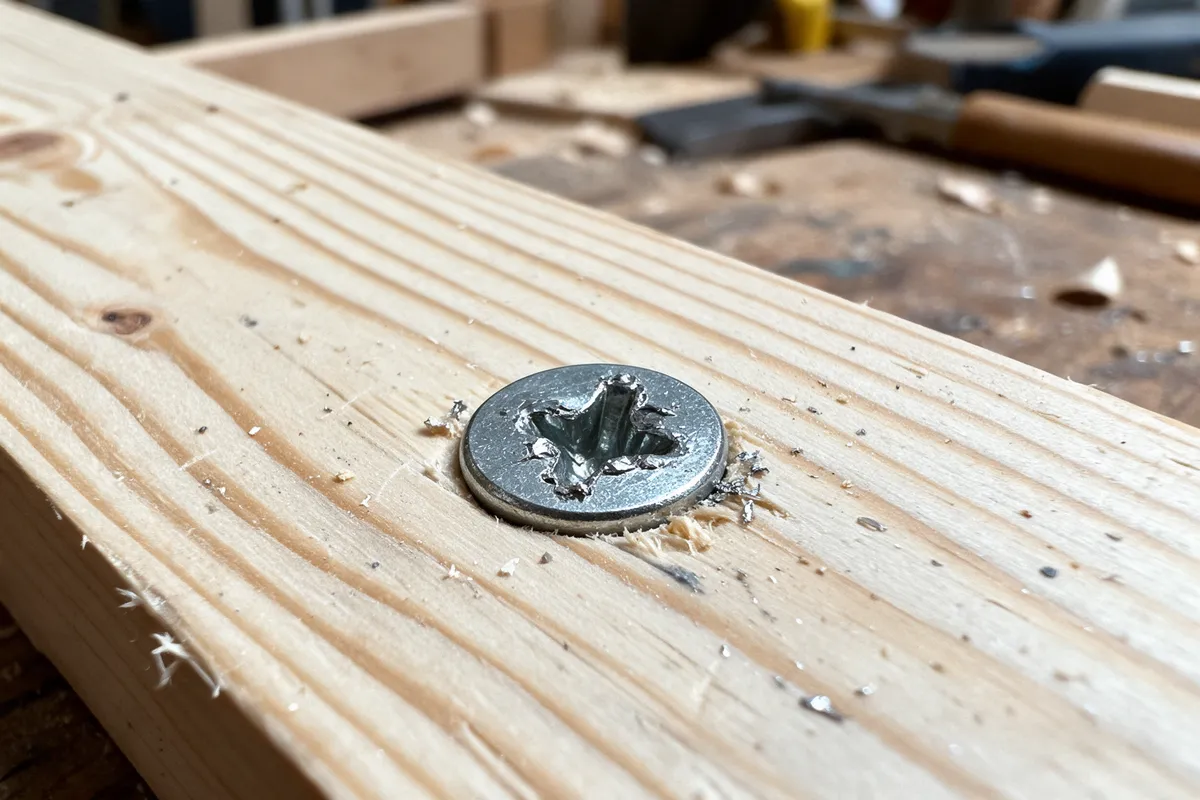
| What you have | Try first | If that fails |
|---|---|---|
| Phillips or slotted head, chewed | Correct bit, hard pressure, rubber band or grit | Impact driver, cut a slot, pliers, extractor |
| Hex (Allen) socket, rounded | Next size up (or a metric/inch swap), tapped in; a Torx bit tapped in | Extractor, left-hand drill, drill the head |
| Torx, rounded | Correct size checked against a fresh bit, tapped in | Extractor, left-hand drill |
| Head gone, shank left | Locking pliers on the stub | Extractor or left-hand drill in the shank |
| Screw spins in the hole | Pull out while you turn | The hole is the problem: fix the hole |
Stop and look before you push harder
Most heads strip because the bit was the wrong one, not because the screw was stuck. A Phillips bit in a Pozidriv screw (the one with four extra small lines between the slots) sits loose and climbs out. On Japanese cameras, motorcycles and electronics, many cross-head screws are JIS, which looks like Phillips but is shaped slightly differently; a Phillips driver tends to cam out of them. On hex sockets, an inch key in a metric screw (or the reverse) can be just loose enough to round the corners.
Also ask why it is tight. Threadlocker, rust or paint in the threads make a screw hard to start. Heat (for threadlocker, if the part can take it) or penetrating oil and time often do more than a bigger screwdriver.
1. The right bit, pushed hard
Put a fresh bit of the correct type and size in the head, keep it in line with the screw, and push hard while you turn slowly. Pressure is what keeps a cross-head bit from camming out. A hand screwdriver with a long handle gives better feel than a drill. On a hex or Torx socket that is only slightly rounded, a key one size larger, or a Torx bit lightly tapped into the hex, can catch on what is left.
2. A rubber band or an abrasive between bit and head
A wide rubber band laid over the head fills the rounded recess and adds grip. People also put a dab of valve grinding compound or another abrasive paste on the bit for the same reason. Both are common fixes that work on a lightly damaged head and do nothing for a recess that is gone; treat them as worth one try.
3. A manual impact driver
A manual impact driver is a heavy handle you hit with a hammer. Each blow drives the bit into the head and turns it a little at the same moment, so the bit cannot climb out. Set it to loosen, seat the bit, and strike firmly. It is the usual answer for seized cross-head screws in steel, such as on motorcycles and engines. It is too rough for screws in wood, plastic or thin trim.
4. Cut a slot, or grab the head
If the head stands proud of the surface, cut a straight slot across it with a rotary tool and a thin cutoff disc or a hacksaw, then use a wide flat screwdriver. Keep the slot deep and square. On a round or pan head that sticks out, locking pliers clamped hard on the outside of the head often turn it where any bit would fail. This is also the first thing to try when the head has broken off and a stub of shank sticks out.
5. A screw extractor
An extractor works on a screw whose head is ruined or gone. Center punch the middle of the screw, drill a pilot hole straight down its center, then tap the extractor into the hole and turn it counterclockwise with a tap wrench. The extractor is a hardened, tapered, left-hand spiral, so turning it to the left drives it deeper and wedges it tighter, until the screw gives and backs out.
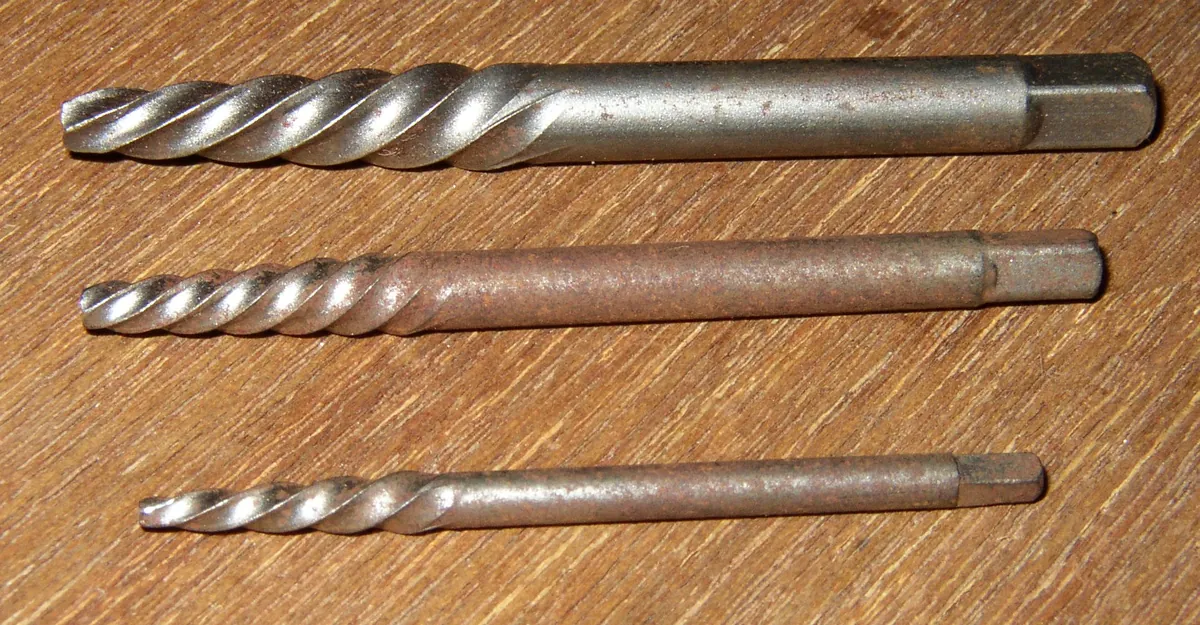

The pilot drill is set by the extractor size, and the size is usually marked on the tool. Two published maker charts (IRWIN Hanson and Gray Tools) give the same pilot drill for sizes #1 to #4 and #6, and different ones for #5. They also disagree on which screw sizes each extractor covers, so follow the chart for the brand in your hand. Decimal sizes for these drills are in the drill size chart.
| Extractor | Pilot drill |
|---|---|
| #1 | 5/64" 0.0781 in, 1.99 mm |
| #2 | 7/64" 0.1094 in, 2.78 mm |
| #3 | 5/32" 0.1563 in, 3.97 mm |
| #4 | 1/4" 0.2500 in, 6.35 mm |
| #5 | varies by maker: 17/64" or 19/64" |
| #6 | 13/32" 0.4063 in, 10.32 mm |
Keep the pilot hole inside the screw: a hole that wanders into the threads of the part makes everything harder. Turn the extractor gently and steadily. Extractors are hard and brittle, and one that snaps off inside the screw leaves a piece that ordinary drill bits will not cut. Wear eye protection when drilling and when turning one hard.
6. A left-hand drill bit
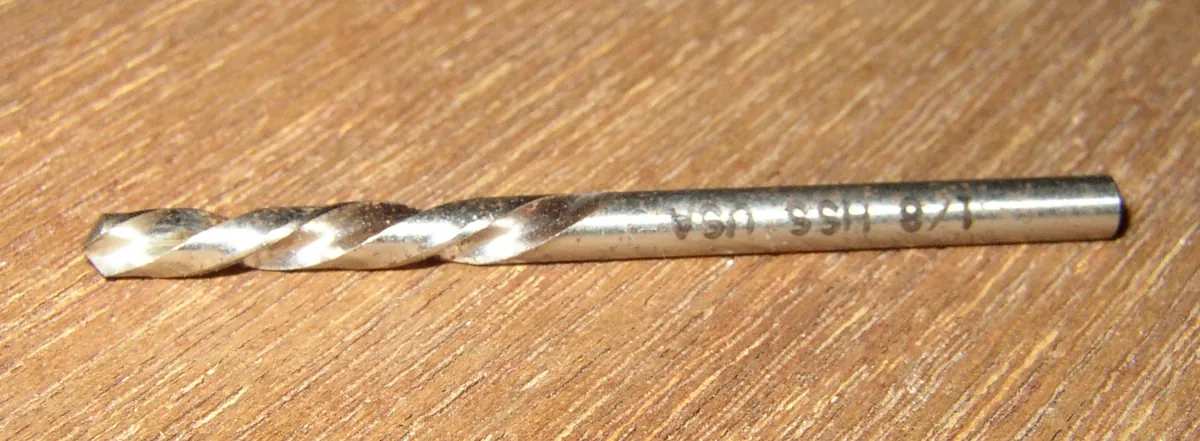
A left-hand drill bit cuts when the drill runs in reverse. Drill the pilot hole with one and the screw often catches on the bit and spins out on its own, because the bit turns the loosening way. If it does not, you have the pilot hole for the extractor anyway. Many extractor kits include left-hand bits for that reason.

7. Drill the head off
When nothing grips, drill through the head with a bit about the size of the screw shank, centered on the screw, until the head comes away. The part it held lifts off, and a stub of screw is left standing, which you can usually turn out with locking pliers once the clamping load is gone. If the stub is flush or snapped below the surface, go back to the extractor or left-hand bit.
Small screws in wood and instruments
A common question is a stripped screw in a guitar: pickguard, tuner or strap button screws are small and set in a finished surface. Work with a hand driver only, use the rubber band first, then pliers on the head if it stands proud. Tape around the screw protects the finish from slipping tools. Avoid drilling near the finish unless it is the last option.
For stripped screw heads on equipment (appliances, electronics, machinery), check the drive type first, since JIS, Pozidriv and security heads are often mistaken for Phillips. Then work down the list: impact driver for steel parts, a cut slot for exposed heads, extractor last.
After the screw is out
Replace it rather than reuse it. If the threads in the part were damaged on the way out, or the screw spun because the hole was worn, see how to fix a stripped screw hole. For a screw of the same size, screw sizes explained shows how to read and measure the old one.